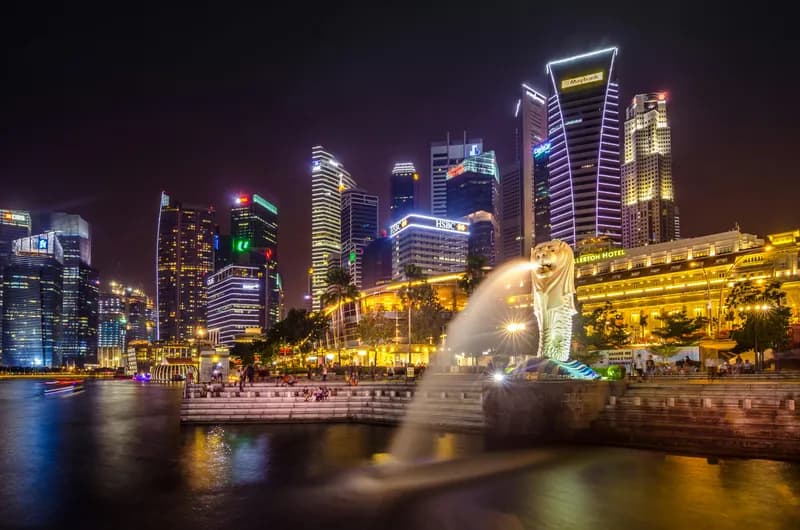
Overview
Singapore is a city-state built on efficiency, ambition, and multiculturalism. It's not chaotic like Bangkok or Delhi; it's clean, ordered, and futuristic—a place where technology and planning intersect. The city-state is small (you can cross it in an hour), but incredibly dense with culture, dining, design, and green spaces. Singapore is a synthesis of Chinese, Malay, Indian, and British influences; these cultures exist visibly in distinct neighborhoods while coexisting harmoniously. The food culture is extraordinary—hawker centers (open-air food courts) offer some of the world's best street food at incredibly cheap prices; high-end restaurants explore global cuisines. Singapore is expensive compared to regional neighbors, but it's efficient, comfortable, and offers experiences other Southeast Asian cities cannot. The city rewards both focused exploration (neighborhoods, museums, temples) and wandering (markets, parks, hawker centers).
Best Time to Visit
Singapore has tropical heat and humidity year-round. January to March and July to September bring slightly drier periods and clearer skies. Avoid Chinese New Year (January-February) and Deepavali (October-November) unless you specifically want to experience these celebrations; the city is crowded and prices spike. The monsoons (December-January and June-September) bring afternoon rains but don't disrupt most activities. Plan for heat and humidity year-round; dress lightly and stay hydrated.
Neighborhoods to Know
Marina Bay: The modern downtown, with the Marina Bay Sands Hotel, Gardens by the Bay, and the ArtScience Museum. It's futuristic, touristy, and worth a visit for iconic Singapore experiences. The area is clean, designed, and slightly sterile.
Chinatown: Historic and vibrant, with temples, markets, shophouses, and street food stalls. It's less polished than Marina Bay but more authentically Singaporean. Early mornings show the neighborhood's actual rhythms.
Little India: The Indian neighborhood, with temples, spice shops, restaurants, and a distinct cultural atmosphere. It's more compact than Chinatown but equally vibrant. The streets smell of spices and flowers.
Arab Quarater & Kampong Glam: The Muslim neighborhood, with the ornate Sultan Mosque, restaurants, and shops. It's quieter and less crowded than Chinatown; it's worth a full morning or afternoon of exploration.
Orchard Road: The shopping district, lined with luxury malls and department stores. It's commercial and crowded; less culturally interesting unless you're shopping.
East Coast: The coastal neighborhood with parks, beaches, and cafes. It's quieter and good for a break from downtown intensity.
Pulau Ubin & Islands: The islands off Singapore's coast, quieter and more natural, with cycling, hiking, and village-like atmospheres. Day trips here offer escape from the city's density.
Food & Drink
Singapore's food culture is exceptional—synthesizing Chinese, Malay, and Indian traditions. Hawker centers offer some of the world's best cheap eats; Michelin-starred restaurants explore sophistication.
Hawker Centers & Street Food: Chicken rice, laksa (noodle soup), char kway teow (wok-fried noodles), satay, dim sum, and dim sum, and endless other preparations. Hawker centers are the heart of Singapore's food culture; meals cost a few dollars and quality is high.
Mid-Range Dining: Restaurants serving regional cuisines, elevated versions of hawker food, and casual dining. These range from small shops to modern establishments.
Elevated Dining: Singapore has numerous Michelin-starred restaurants and fine dining establishments exploring cuisines globally. Several occupy notable locations or design spaces.
Experiences by Traveler Type
Every traveler is different. Explore what Singapore has to offer based on how you like to travel.
Experiences by Traveler Type
- Sunset at the Marina Bay Sands Hotel rooftop pool or bar, watching the city transform as light fades
- Private cooking class learning Singaporean dishes—chicken rice, laksa, satay—in a home or cooking school
- Couples massage at a luxury spa or traditional Chinese medicine clinic, followed by exploring a neighborhood
- Night stroll through Chinatown or Kampong Glam, eating street food and drinking at a traditional coffee shop
Getting Around
The Mass Rapid Transit (MRT) is exceptional—efficient, clean, and covers the entire city-state. Buses are numerous, cheap, and reliable. Taxis are abundant; ride-sharing apps (Grab, Gojek) are ubiquitous and cheap. Walking is viable in neighborhoods like Chinatown, Little India, and Marina Bay; the city is small enough to explore on foot. Bicycles can be rented; several bike-sharing systems operate.
Insider Tips
- 1Hawker centers are the best place to eat—cheap, diverse, and high-quality. Maxwell Food Centre, Chinatown Complex, and Tiong Bahru Market are popular; every neighborhood has excellent hawker centers.
- 1Chinatown and Little India are best visited early morning (6-8 AM). By 9 AM crowds dominate; early hours show the neighborhoods' actual rhythms—local life, commerce, worship.
- 1MRT is the best transport. Taxis and Grab work, but the MRT is faster, more reliable, and cheaper. A stored-value card makes it seamless.
- 1Islands (Pulau Ubin, Sentosa) offer escape from the city's density. Day trips are easy and reveal a different Singapore—quieter, more natural, more relaxed.
- 1English is widely spoken. This makes Singapore comfortable for travelers but slightly removes you from immersion; making effort to learn Malay or Mandarin phrases earns goodwill.
---