Overview
Mumbai is raw, overwhelming, and exhilarating in a way that India's other cities often aren't. The city is a peninsula jutting into the Arabian Sea, connected to the mainland by bridges; it's an island metropolis with perhaps twenty million people compressed into relatively small geography. The wealth disparity is visible and stark—skyscrapers overlooking sprawling slums, luxury malls adjacent to street markets, fashion and cinema next to informal economies. But Mumbai moves forward with energy; it's where Indian cinema is made, where finance and commerce center, where Indian modernity is most visible. Colonial architecture—grand Victorian buildings—exists alongside contemporary glass towers. The beach culture is unique in India; you can swim in the Arabian Sea. The food is a synthesis of regional Indian and international cuisines, available at every price point. Mumbai is not for everyone, but it rewards curiosity and tolerance for density.
Best Time to Visit
October to March brings dry weather and clear skies; December to February is cool and best for visiting. July to September is the monsoon, bringing dramatic rains and lower visibility; however, the beaches are turbulent and dramatic. April to June is hot (temperatures above 35°C/95°F) and humid. Peak season is December-January; aim for October-November or February-March for good weather with fewer crowds.
Neighborhoods to Know
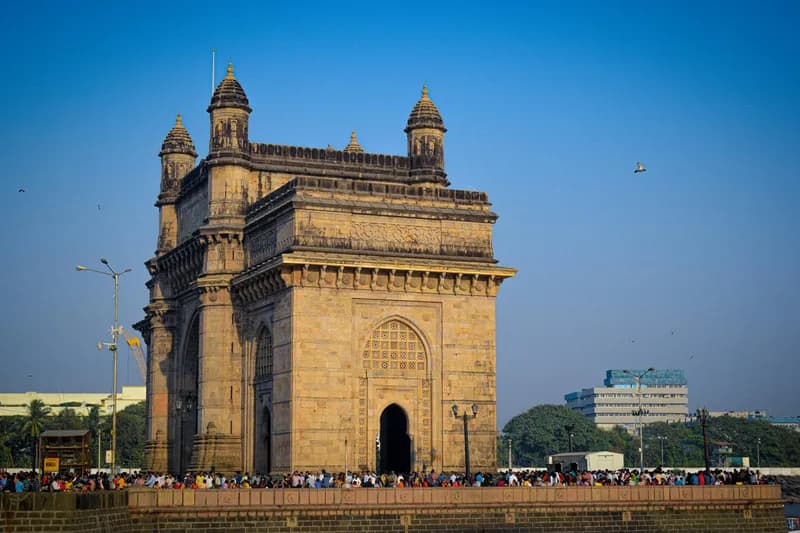
South Mumbai (Fort & Downtown): The historic colonial center, with Victorian architecture, the Gateway of India, and the Taj Hotel anchoring the waterfront. It's touristy and easy to navigate; museums, restaurants, and landmarks cluster here.
Marine Drive (The Queen's Necklace): The curved seafront promenade, lined with Art Deco buildings, offering sea breezes and an evening stroll experience. It's beautiful, populated, and offers escape from city chaos.
Colaba: The southernmost neighborhood, home to backpackers and travelers. Leopold Cafe is legendary among travelers; the neighborhood has hostels, cafes, and a distinct backpacker bubble.
Bandra & Worli: West and northwestern neighborhoods where bohemian energy concentrates. Art galleries, cafes, nightlife, and younger Mumbaiites cluster here. It's where creative Mumbai gathers.
Dharavi: The sprawling slum, vast and complex, offering a reality-check to Mumbai's luxury zones. Ethical slum tours exist; they support residents and offer genuine perspective on urban India.
Dadar, Parel & Central Mumbai: Residential and commercial neighborhoods where everyday Mumbai happens—markets, small restaurants, and local life. These areas are less touristy and more authentic.
Dhobi Ghat & Old Markets: Historic washing areas and bazaars where Mumbai's informal economy thrives. Dhobi Ghat (open-air laundry) is a particular spectacle—hundreds of washermen working in coordinated chaos.
Food & Drink
Mumbai food is a synthesis of regional Indian cuisines and international influences. Street food is foundational; bhelpuri (puffed rice and vegetable snack), vada pav (fried potato dumpling), pav bhaji (spiced vegetable with bread), and countless others define street eating.
Street Food & Stalls: Vada pav, pav bhaji, bhelpuri, chaat varieties, dosa (South Indian crepe), idli (rice cake), samosas, and endless fried snacks. Street vendors cluster everywhere; quality varies, but top stalls are exceptional.
Mid-Range Dining: Small restaurants serving regional Indian food, street food elevated to sit-down format, and Maharashtrian specialties. These are where locals eat; prices are low and quality is high.
Elevated Dining: Mumbai has excellent restaurants exploring regional Indian, international, and fusion cuisines. Several occupy historic buildings or have notable design; quality is high.
Experiences by Traveler Type
Every traveler is different. Explore what Mumbai has to offer based on how you like to travel.
Experiences by Traveler Type
- Sunset walk on Marine Drive, ending with drinks overlooking the sea at a bar or cafe
- Private cooking class learning Mumbai street food—vada pav, pav bhaji, chaat—in a home or cooking school
- Couples massage at an Ayurvedic spa, followed by exploring Bandra's galleries and cafes
- Dinner at a rooftop restaurant overlooking the city lights
Getting Around
The Mumbai Metro is expanding and fast. Local buses and trains (suburban trains, called "locals") move most Mumbaiites; they're cheap and crowded but functional. Taxis and auto-rickshaws are everywhere; ride-sharing apps (Uber, Ola) are ubiquitous. Ferries connect islands and offer scenic transport. Walking is viable in certain neighborhoods (South Mumbai, Marine Drive, Bandra) but long distances are exhausting. Traffic is intense; expect congestion.
Insider Tips
- 1Dhobi Ghat at early morning (6-8 AM) is a spectacle. Hundreds of washermen work in synchronized chaos, beating clothes on stones. It's working-class Mumbai at its most visible; go respectfully with a camera if interested, but ask permission.
- 1Street food is the best food and cheapest. Eat where lines form and turnover is high. Your stomach will adjust; the flavors are worth any momentary risk.
- 1Ferry rides are scenic and cheap transport. Taking the ferry from Gateway to other areas offers sea views and an experience beyond car travel.
- 1Fort (South Mumbai) has colonial architecture worth exploring. Walking these streets reveals Victorian buildings that still house government offices, banks, and businesses.
- 1Dharavi slum tours support residents if done ethically. Choose operators that explicitly support residents and pay them; the experience provides perspective on urban India.
---