Overview
Kathmandu is a city of profound spiritual energy combined with chaotic urban reality. Temple courtyards hold centuries of devotion; pilgrims circumambulate stupas while motorbikes thunder past; bells ring from rooftops while children play cricket in the streets. The city sits in a valley surrounded by mountains; the Kathmandu Valley contains more UNESCO World Heritage Sites than any region of comparable size. The architecture is wood and brick, detailed and intricate, with traditional elements mixing with modern structures. The air smells of incense, prayer flags flutter from every vantage point, and the pace is slower than other South Asian capitals. Kathmandu can feel gritty and chaotic on first encounter, but patience reveals a city of unexpected grace. Trekkers pass through on their way to Everest, but the city itself deserves extended time.
Best Time to Visit
September to November brings clear skies and mild temperatures—ideal for exploring and trekking. December to February is clear but cold, especially at night; early mornings can be chilly. March to May is warm and increasingly hazy (poor air quality); monsoon season (June-August) brings afternoon rains. October is spectacular for clarity and temperature; avoid the monsoon season if visibility matters to you.
Neighborhoods to Know
Kathmandu Durbar Square & Old City: The historic heart, where temples cluster densely and the medieval city unfolds. Durbar Square is touristy but functional—locals live and work here despite tourism. The surrounding neighborhoods hold family shrines, markets, and the texture of Kathmandu life.
Thamel: The traveler neighborhood, packed with budget hotels, tourist restaurants, and a distinct backpacker subculture. It's a bubble, but a social and convenient one. Most travelers base themselves here for accessibility.
Patan: A separate city (technically, though now connected to Kathmandu), with its own Durbar Square and distinct character. It's less touristy than Thamel, more residential, and worth a full day of exploration.
Bhaktapur: A third city in the valley, an hour's drive from Kathmandu, with ancient temples and less tourist presence. It's quieter and feels more rooted in traditional life than Kathmandu proper.
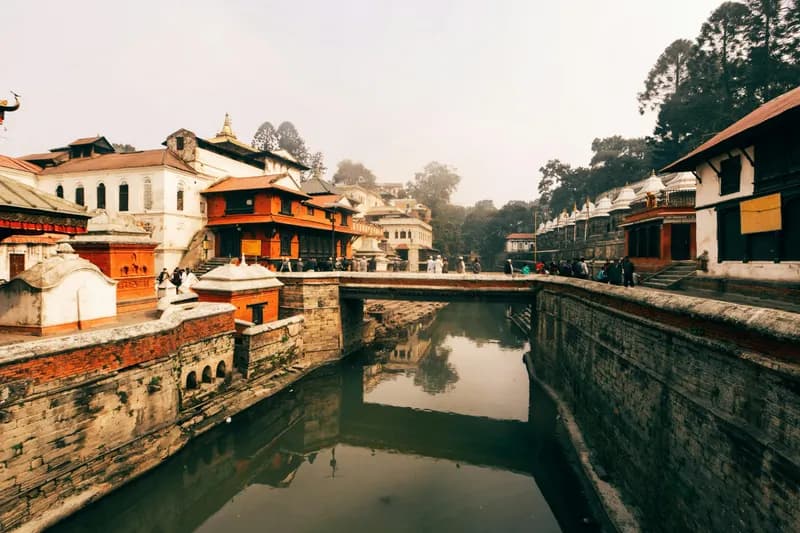
Swayambhunath & Pashupatinath: Temples on the valley's periphery—Swayambhunath (the Monkey Temple) with monkey troops, and Pashupatinath (the holiest Hindu temple in Nepal) on the Bagmati River. Both are pilgrimage sites; visiting reveals spiritual practice.
Kathmandu Valley Rim: Villages and smaller towns ringing the valley are accessible by day trips; they're quieter and more agricultural than the city center.
Food & Drink
Nepali cuisine balances spice and simplicity. Dal bhat (lentils and rice) is the foundation; momos (dumplings), newari cuisine (local to the Kathmandu Valley), and street snacks complete the landscape. The food is less intense than Indian cuisine but shares some similarities.
Street Food & Stalls: Momos (steamed dumplings, often filled with meat or vegetables), sel roti (sweet rice fried circle), aloo tikki (potato patties), and endless savory and sweet snacks. Street vendors cluster in markets and near temples; they're cheap and delicious.
Mid-Range Dining: Restaurants serving dal bhat, momos, and traditional Nepali food. Many cater to both travelers and locals; prices are low and quality is good.
Elevated Dining: Kathmandu has restaurants exploring Nepali traditions with refinement, often in heritage buildings or boutique hotels. There's also international food available for travelers not ready to commit to the local cuisine.
Experiences by Traveler Type
Every traveler is different. Explore what Kathmandu has to offer based on how you like to travel.
Experiences by Traveler Type
- Sunrise walk to Swayambhunath Temple, climbing the long staircase to the stupas, watching monkeys and pilgrims, viewing the valley below
- Private cooking class learning to make momos and dal bhat, followed by eating your creations in an intimate setting
- Sunset walk around Pashupatinath Temple, watching pilgrims and the ritual of evening worship along the river
- Couples massage at a traditional Ayurvedic clinic, followed by exploring Patan's quiet neighborhoods and temples
Getting Around
Kathmandu is compact enough to walk in parts (Thamel, Durbar Square area), though distances are deceptive. Taxis are cheap; ride-sharing apps exist but work inconsistently. Motorbikes are rentable but traffic is chaotic. The best way to explore Patan and Bhaktapur is by taxi or organized tour. Local buses are incredibly cheap but confusing for tourists; walking and taxis are easier.
Insider Tips
- 1Visit temples early morning or late evening. Midday sees tour groups; early and late reveal pilgrimage practice and quieter energy.
- 1The Bagmati River at Pashupatinath is where cremations occur. It's a sacred and serious space; approach with reverence. Photography requires sensitivity and permission.
- 1Patan and Bhaktapur are worth full days. Many travelers rush through these; they deserve extended exploration and are less touristy than Thamel.
- 1Get lost in the old city's narrow lanes. Walking without a map reveals hidden courtyards, family shrines, and local restaurants that no tour would show.
- 1Momos from street vendors are better and cheaper than restaurant momos. The best places are where locals line up; ask where to eat and follow.
---