Overview
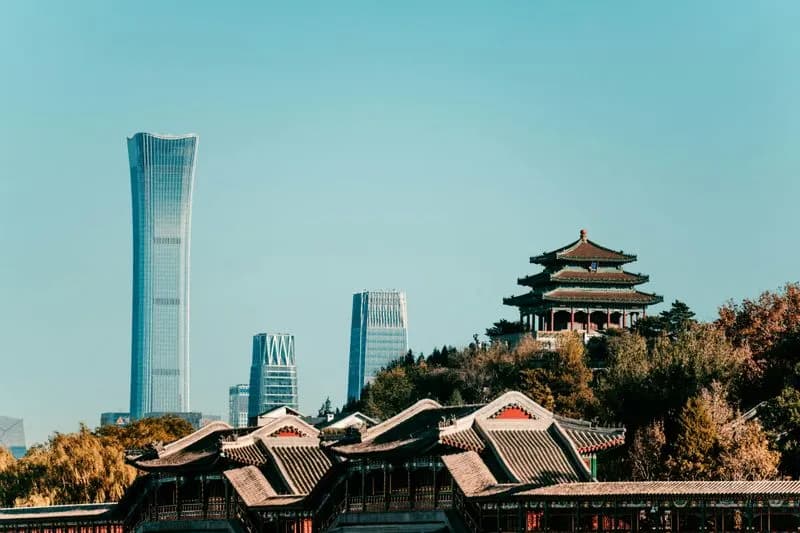
Beijing is a city of contrasts that somehow cohere. The Great Wall rises to the north, a physical reminder of ancient ambitions. Within the city, the Forbidden City sits as an architectural masterpiece, its walls and gardens revealing centuries of palace life. But Beijing is equally a city of the present—skyscrapers, underground subway lines, contemporary art galleries in converted factories, restaurants pushing Chinese cuisine into new territories. The hutongs (narrow alleyways where traditional courtyard homes cluster) represent old Beijing's soul; they're being demolished and rebuilt, but pockets of the original remain. The food is bold and regional: thick noodles in rich broths, Peking duck that's been perfected over centuries, street snacks like jianbing (crepe) and baozi (steamed buns). Beijing rewards extended time—three days is bare minimum; two weeks wouldn't be excessive.
Best Time to Visit
September to November brings crisp, clear days and the most comfortable temperatures—ideal for wandering the Great Wall and exploring hutongs. April to May is spring, with longer days and moderate weather, but crowds increase. Winter (December-February) is cold and dry; visibility is often poor due to smog, but fewer tourists venture here. Summer (June-August) is hot and humid. Avoid October 1st (National Day) when the entire city is mobbed.
Neighborhoods to Know
Chaoyang: Modern, cosmopolitan Beijing. This is where expats live, where international restaurants cluster, where contemporary art galleries occupy industrial spaces. It's less "authentically Beijing" but more comfortable for Western travelers; you'll find English, diverse food, and neighborhoods like Sanlitun that feel almost familiar.
Dongcheng & Xicheng: The old city, where hutongs cluster densely. These districts still contain Beijing's spiritual heart—temples, courtyard homes, the rhythms of neighborhood life. Navigating hutongs by foot reveals hidden shrines, family businesses, and the textures of a disappearing city.
Haidian: The university district, northwest of the center. It's younger, more experimental, with bookstores, cafes, and a student energy. Less polished than other areas, but genuinely rooted in contemporary Chinese culture.
Fengtai: South of the center, less touristy, with excellent local markets and a more residential feel. The Temple Fairs here, especially during Chinese New Year, are spectacular.
Chongwen: The area south of the Forbidden City, quieter than Dongcheng, still containing hutongs and hidden temples. Less explored by tourism, which is precisely why it rewards exploration.
Food & Drink
Beijing's signature dish is Peking duck—roasted until the skin is crackling, served with thin pancakes, scallions, and sweet bean sauce. But Beijing cuisine extends far beyond: hand-pulled noodles (lamian), soup dumplings (xiaolongbao, though these are more Shanghai), jianbing (savory crepes), baozi (steamed buns), and fierce street snacks.
Street Food: Jianbing (crepe with egg and scallion), baozi (steamed pork buns), youtiao (fried dough), rice porridge with preserved vegetables, and tea eggs. Early morning markets along the hutongs smell like breakfast—garlic, sesame oil, frying oil, and possibility.
Mid-Range Dining: Noodle shops, dumpling houses, and small restaurants serving regional Chinese foods. These often operate without English menus; asking locals or using translation apps is part of the experience.
Elevated Dining: High-end Peking duck restaurants, hotpot places with premium ingredients, and contemporary chefs reinterpreting Beijing traditions. Some of China's most innovative cooking happens here.
Experiences by Traveler Type
Every traveler is different. Explore what Beijing has to offer based on how you like to travel.
Experiences by Traveler Type
- Sunrise hike to Jinshanling, a less-crowded section of the Great Wall with restored portions and wild sections, where you can walk alone for stretches
- Private hutong walking tour with a local guide, stopping at family homes (if invited), eating at hole-in-wall noodle shops, ending with sunset from a rooftop cafe overlooking the old city
- Couples massage at a traditional Chinese medicine clinic, followed by a late dinner of Peking duck and local beer
- Private calligraphy or painting lesson from an artist in their studio; the slowness and intimacy of learning brushwork together is meditative
Getting Around
The subway is extensive, clean, and cheap; you'll need a transit card. Taxis are abundant; Didi (China's Uber) works if you have a Chinese phone number, or use Grab in some areas. Motorbikes are restricted in the city center. Walking is often faster than taxis during rush hour. Bicycles can be rented (though cycling in traffic requires nerves). Getting lost in hutongs is inevitable and excellent—you'll find things no tour would show you.
Insider Tips
- 1Hutongs are disappearing. Visit them now, especially the smaller, less-touristed ones. Walking the alleyways at dusk, you'll see families cooking dinner, children playing, elderly people sitting outside—the real Beijing.
- 1Street food vendors operate at specific times. Jianbing vendors start around 6 AM; lunch noodle shops peak at noon; night snack vendors appear around 8 PM. Timing your visit to neighborhoods changes what you'll find.
- 1The Forbidden City warrants multiple visits. Even if you spend a full day here, you'll have missed sections. Return and explore different courtyards and halls; each reveals different stories.
- 1Learn basic Mandarin phrases. English proficiency is lower in Beijing than in tourist hubs; "ni hao" (hello), "xie xie" (thank you), and "duo shao qian" (how much) will earn you warmer responses and better deals.
- 1Great Wall at sunrise beats any other time. The most famous sections (Badaling, Mutianyu) are less crowded at dawn. Drive out the night before or catch an early bus; the light and solitude are worth the early alarm.
---